UNACCOMPANIED LATIN AMERICAN MINOR PROJECT
  • Home
  • About Us
    • Our Story
    • What We Do
  • Who We Are
    • Project Director
    • Co-Coordinators
    • Partners of U-LAMP
  • U-LAMP Network
    • Current Cohort >
      • Fall 2025-Spring 2026
    • Past Cohorts >
      • Fall 2024 - Spring 2025
      • Fall 2023 - Spring 2024
      • Fall 2022 - Spring 2023
      • Summer 2021
      • Fall 2020-Spring 2021
      • Fall 2019 - Spring 2020
      • Summer 2019
      • Fall 2018-Spring 2019
      • Summer 2018
      • Fall 2017-Spring 2018
      • Summer 2017
      • Fall 2016-Spring 2017
      • Summer 2016
      • Fall 2015- Spring 2016
      • Summer 2015
      • Fall 2014- Spring 2015
  • U-LAMPERS in Action
    • Vicarious Trauma Training
  • Alumni News
    • Immigrant Justice Corps Community Fellows
  • Research
    • Dr. Isabel Martinez's Book >
      • About the Book
      • Purchasing the Book
      • Book Talks
    • Current Research
    • Research Assistants
  • U-LAMP Professional Development
    • Vicarious Trauma Training
    • Protecting the Migrant Child
    • ​Best Practices Representing Youth Before the Asylum Office
    • Status Adjustments and Immigration Consequences of Convictions
    • Overview of Immigration Law
    • Unaccompanied Children and the Priority Docket: New York’s Experience
    • Enhancing Cultural Competency in Advocacy for Unaccompanied Children
    • Understanding and Recognizing Vicarious Trauma
    • Immigration and Nationality Law Course
  • Resources
    • History of Immigration
    • Central America
    • Mexico
    • Legal Representation
    • Detention and Deportation
    • Education
  • Press
  • Contact Us
  • Law School Students
  • Law School Graduates

Children at the Border: Trapped in Limbo
By Univision 

The Dimensions
By José Fernando López

More than 50,000 children apprehended at the border. More than 50,000 children who, weary of the violence experienced in their countries, have set forth on their way to the United States. More than 50,000 children deceived by ‘coyotes’ and traffickers. More than 50,000 children tired of shuffling along the paths of hell. More than 50,000 children hoping for a better life.

President Barack Obama said it. Today the United States is living through a terrible humanitarian crisis. More than 50,000 unaccompanied children from Mexico and Central America (Guatemala, Honduras and El Salvador, in particular), have reached the United States in the last eight months *. Thousands have been returned to their country (mostly Mexicans). The others remain in immigration limbo, with the threat of deportation.
To Continue reading click here

Halfway There
By Luz Adriana Santacruz

His injuries have yet to heal. It has been two years since he fled El Salvador, the country where he left his friends and family behind, but also the place where he left behind the violence of the gangs that were hounding him. Tired and fed up with the horror surrounding him, he decided go over mountains, cross rivers and traverse countries. He had no money and he was not worried about what awaited him. He just wanted to get away.
​
With a lump in his throat and a deep sight, Ángel, a fictitious name used to protect his identity, now age 19, remembers that ever since he was a young boy he wanted “to go north.” That wish was his life’s inspiration, but it was really the problems he had with a gang that made him to emigrate urgently.
to continue reading click here

The Causes of the Problem
By Maria Arce

Ángel, the Salvadoran adolescent who crossed three countries in his attempt to reach the United States, fled his country having suffered harassment resulting from fights between Mara gangs that claimed the life of his brother and threatened to end his.

“Children simply do not cross international borders unless something terrible is happening at home,” says Wendy Young, president of Kids in Need of Defense, KIND, an organization founded by Angelina Jolie and Microsoft to give legal assistant to migrant children.
​
“The main reason (for this migration) is the violence in Central America. The violence has become more intense, more extreme, and is aiming toward the children,” Young emphasizes. “It is taking over communities, schools, homes. This is not a migration problem; it is a refugee problem,” she notes concerning the crisis that is inundating the United States as a result of the massive arrival of under-age migrants.
to continue reading click here

A Harsh Journey
By Leonor Suárez

“It’s horrible…the things you see along the way are horrible,” says Zaira, holding back her tears as she recalls what has just happened while bringing her children to the United States. She accompanied her young ones on the journey others are making by themselves.
​
Most of these children set off on their own, or accompanied by a stranger, onto the untamed world of the Central American borders, riddled with predators who feed on the misery of others: the “coyotes,” for whom it is a business to take children back and forth.
to continue reading click here

And What to Do with the Children? 
​By Jorge Cancino

Nobody knows for sure what is going to happen with all the unaccompanied children who have been detained at the border. The law requires that within 72 hours the authorities must determine whether this has to do with a minor, whether he or she is unaccompanied, whether he or she has family in the United States or whether he or she has been abandoned. Meanwhile, the child is examined by a physician.

If the child is of Mexican origin, then an accelerated repatriation process is initiated, as stipulated in an agreement signed with that country. If the child is not Mexican, then a deportation process is initiated, which can last months.
​
Children whose parents are present in the United States are reunited through the issuance of a summons to the parents to appear before an immigration court and a deportation process is initiated. Those without relatives are transferred to a Department of Health and Human Services (HHS) shelter.
to continue reading click here

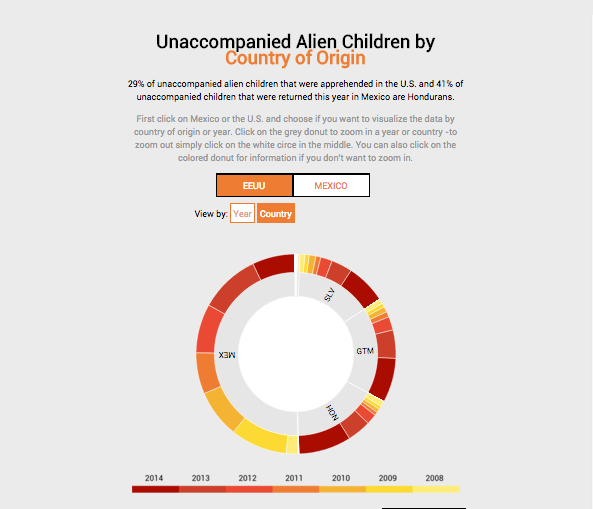
The Numbers of Unaccompanied Children Throughout the Years
Picture
Data on unaccompanied alien children apprehension in the US is published by the U.S .Customs and Border Protection. Data on unaccompanied alien children returns in Mexico are published by the Secretariat of the Interior (SEGOB). For the U.S. we are using fiscal years and data for 2014 was updated for June 15th. For Mexico, 2014 data is updated to April. D4 para Univision Noticias. http://www.data4.mx

Angel's Story
Picture
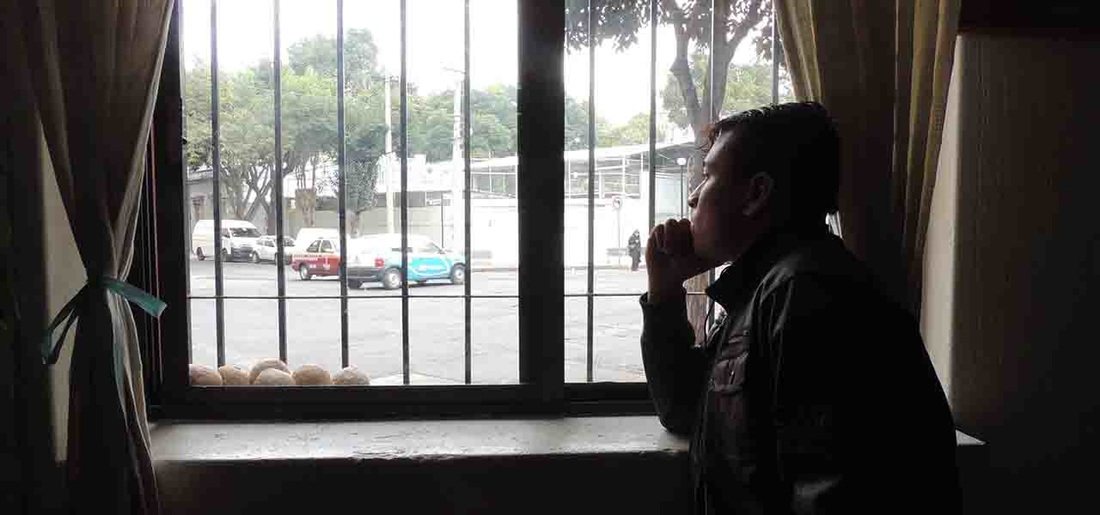
The fear that the Salvadoran Maras would kill him, as they did his brother, was the main reason for Ángel’s exodus.

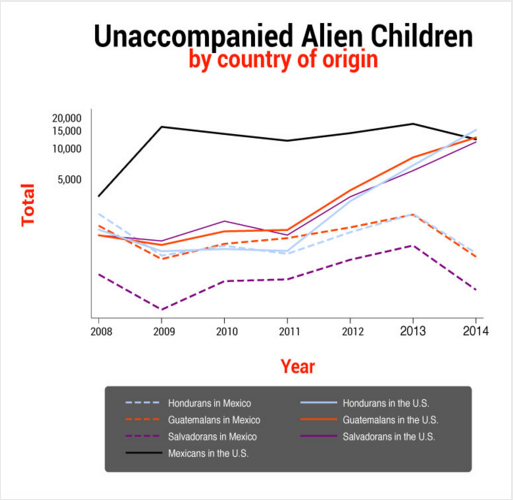
Unaccompanied Children in Mexico and the U.S.
Picture
D4 para Univision Noticias. http://www.data4.mx

La Bestia
Picture
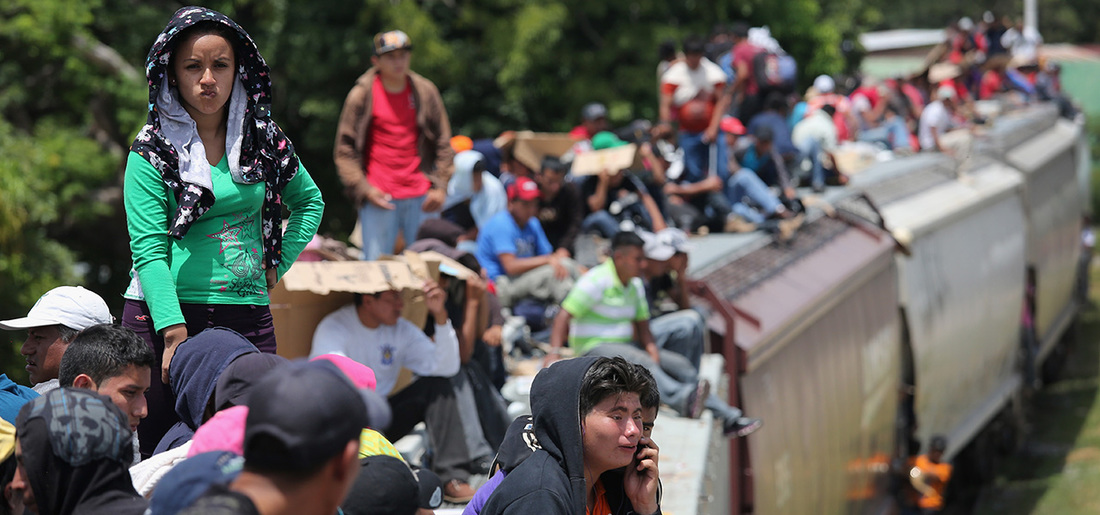
Most Central Americans seeking to reach the United States use “The Beast,” a freight train that runs from Mexico’s southern border all the way to the border with the US.

The Detention Centers

"Thousands of children are waiting in shelters, hopeful of being contacted by some family member."
Picture

De-Romanticizing Our Immigrant Past: Why Claiming "My Family Came Legally" Is Often a Myth
November 25, 2008  

Your browser does not support viewing this document. Click here to download the document.
Powered by Create your own unique website with customizable templates.
  • Home
  • About Us
    • Our Story
    • What We Do
  • Who We Are
    • Project Director
    • Co-Coordinators
    • Partners of U-LAMP
  • U-LAMP Network
    • Current Cohort >
      • Fall 2025-Spring 2026
    • Past Cohorts >
      • Fall 2024 - Spring 2025
      • Fall 2023 - Spring 2024
      • Fall 2022 - Spring 2023
      • Summer 2021
      • Fall 2020-Spring 2021
      • Fall 2019 - Spring 2020
      • Summer 2019
      • Fall 2018-Spring 2019
      • Summer 2018
      • Fall 2017-Spring 2018
      • Summer 2017
      • Fall 2016-Spring 2017
      • Summer 2016
      • Fall 2015- Spring 2016
      • Summer 2015
      • Fall 2014- Spring 2015
  • U-LAMPERS in Action
    • Vicarious Trauma Training
  • Alumni News
    • Immigrant Justice Corps Community Fellows
  • Research
    • Dr. Isabel Martinez's Book >
      • About the Book
      • Purchasing the Book
      • Book Talks
    • Current Research
    • Research Assistants
  • U-LAMP Professional Development
    • Vicarious Trauma Training
    • Protecting the Migrant Child
    • ​Best Practices Representing Youth Before the Asylum Office
    • Status Adjustments and Immigration Consequences of Convictions
    • Overview of Immigration Law
    • Unaccompanied Children and the Priority Docket: New York’s Experience
    • Enhancing Cultural Competency in Advocacy for Unaccompanied Children
    • Understanding and Recognizing Vicarious Trauma
    • Immigration and Nationality Law Course
  • Resources
    • History of Immigration
    • Central America
    • Mexico
    • Legal Representation
    • Detention and Deportation
    • Education
  • Press
  • Contact Us
  • Law School Students
  • Law School Graduates